Dental Bridges
Dental bridges replace missing teeth and restore the natural shape and function of your smile. A bridge fills the space left by a lost tooth, helping you chew comfortably, speak clearly, and keep your bite stable.
Why a Bridge Matters
A gap in your smile can cause more than a cosmetic concern. Nearby teeth drift into the space, your bite can shift, and chewing becomes uneven. Over time, this can strain your jaw and increase the risk of gum problems. A bridge prevents these changes and keeps everything aligned.
How a Bridge Works
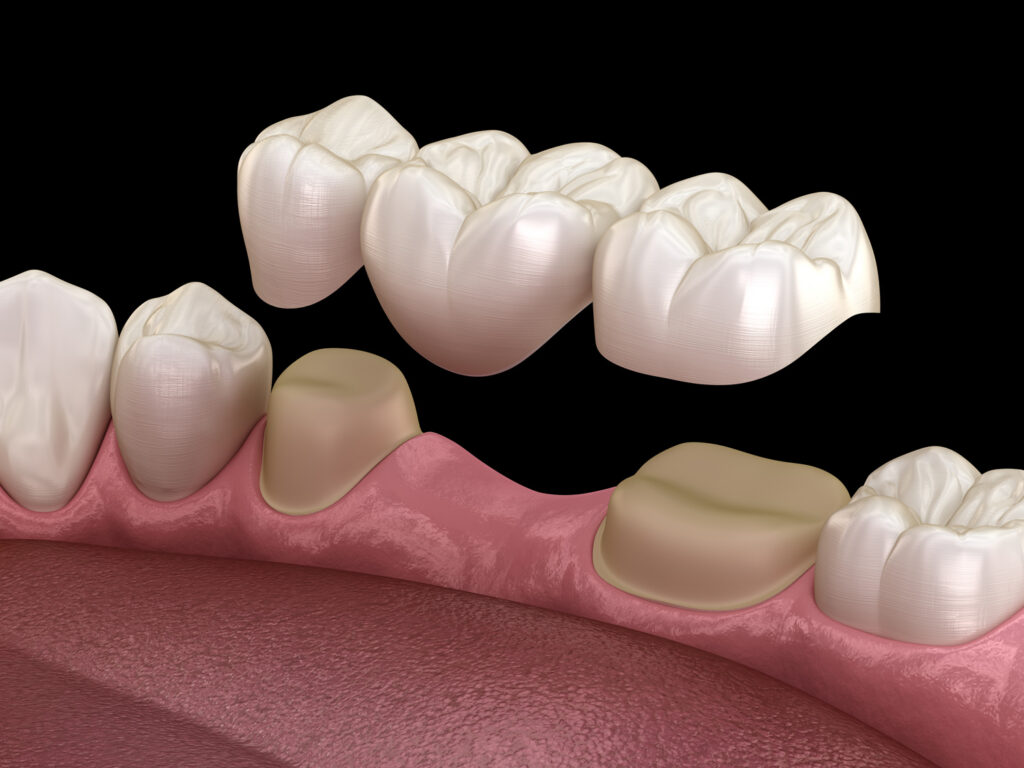
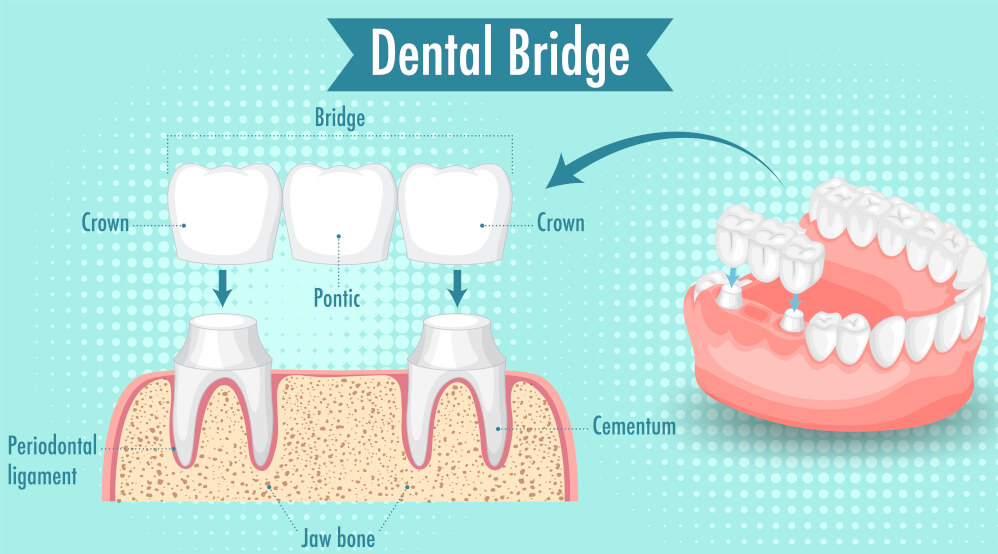
A bridge uses the teeth on either side of the gap as anchors. These supporting teeth are prepared for crowns, and a custom replacement tooth (a pontic) is attached between them. Once the bridge is bonded in place, it looks natural, feels secure, and restores your ability to chew with confidence.
Benefits of a Dental Bridge
- Restores comfortable chewing and clear speech
- Maintains facial shape and prevents a “sunken” look
- Distributes bite forces evenly to protect other teeth
- Prevents shifting and misalignment caused by missing teeth
Types of Dental Bridges
Traditional Bridge
The most common option. Crowns are placed on the teeth on each side of the gap, with a replacement tooth secured between them. These bridges are typically made from porcelain or ceramic for a natural appearance.
Cantilever Bridge
Used when only one neighboring tooth is available for support. Best for small gaps with minimal bite pressure.
Maryland (Bonded) Bridge
A conservative option that uses small metal or ceramic “wings” bonded to the backs of the adjacent teeth. Little to no tooth preparation is needed.
Implant‑Supported Bridge
Ideal when several teeth are missing. Dental implants act as the anchors instead of natural teeth, providing exceptional stability and helping maintain healthy bone structure.
Materials and Customization
Bridges can be crafted from porcelain, ceramic, metal alloys, or a combination of materials. The right choice depends on the location of the missing tooth, your bite, and your aesthetic goals. We’ll guide you toward the option that fits your needs and looks natural.
A Long‑Lasting Solution

With good home care and routine dental visits, a bridge can last for many years. If you’re considering replacing a missing tooth, we can help you choose the approach that restores comfort, confidence, and balance to your smile.